
Discover funding opportunities for hydrogen solutions in the automotive industry
About the session
The DRIVE35 Scale-up Fund is a major, ongoing grant programme from the Advanced Propulsion Centre (APC) designed to accelerate UK innovation in zero-emission vehicle technologies.
This one-hour online session will spotlight funding opportunities in hydrogen mobility, covering fuel cells, storage systems, vehicle integration, and scalable manufacturing. By fostering collaboration between industry and academia, the Scale-up Fund enables ambitious R&D projects that drive the commercialisation of next-generation hydrogen solutions.
You’ll gain insights into:
Gain a clear understanding of DRIVE35 funding priorities and how to access the Scale-up Fund.
Learn about GW-SHIFT’s support offer, including bid development assistance and joint letters of support.
Explore how to form or join strong industry–academic consortia across the seven GW-SHIFT universities (Bath, Bristol, Cardiff, Exeter, Swansea, Plymouth, and the University of South Wales).
Whether you’re working in hydrogen technologies or considering adopting hydrogen solutions, this session will give you a clearer understanding of the opportunities and challenges associated with hydrogen safety.
Agenda
12:00 – 12:05 Welcome and introduction – Karen Brooks
12:05 – 12:15 Overview of GW-SHIFT and SETsquared support – Yuchen Gu
12:15 – 12:30 Funding landscape and DRIVE35 programme – Steve Gasser, APC
12:30 – 12:40 Industry–University collaboration case study – Frazer Ely, Latent Drive
12:40 – 12:50 Hydrogen research capabilities at IAAPS / University of Bath – Karl Giles
12:50 – 13:00 Q&A and wrap-up – All speakers
Meet the Speakers

Steve Gasser, Business Development Manager, APC
Steven started his career in the manufacturing sector, becoming a technical apprentice in the late 1980's. In the years since, his career has been built with firm engineering foundations that has seen him working for R&D organisations, nuclear new build projects and occupying senior roles within the Institution of Mechanical Engineers (IMechE) and the Institution of Chemical Engineers (IChemE).
He has been responsible for activities including business development across industrial and academic markets in the UK and internationally, member recruitment and engagement, graduate recruitment, professional development and technical L&D.
Steven is an Engineering Technician and a Fellow of the Institution of Mechanical Engineers.
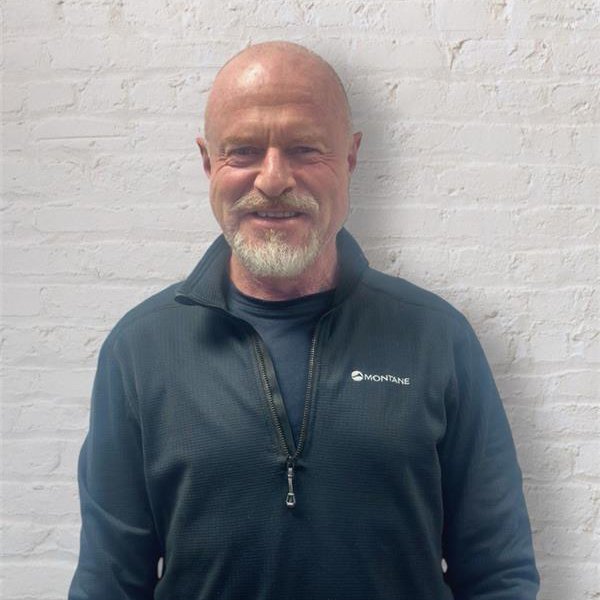
Frazer Ely, CEO, Latent Drive (to represent a business previously supported by SETsquared)
Frazer is an electro-mechanical engineer with over 30 years of hands-on experience developing new technology across start-ups and large global companies. As CEO of Latent Drive, he leads the development of the company’s core technologies: Catrodes – high-performance, platinum-group-metal-free stainless-steel electrodes – and SeaStack, the world’s first commercial direct seawater-to-hydrogen electrolyser for offshore deployment. Frazer is experienced in scaling innovations from prototype to mass production and using the latest additive and rapid manufacturing techniques to bring SeaStack and Catrodes to market. Known for pairing deep technical knowledge with a practical, problem-solving mindset, Frazer guides the Latent Drive team through complex R&D challenges scaling from lab to factory.
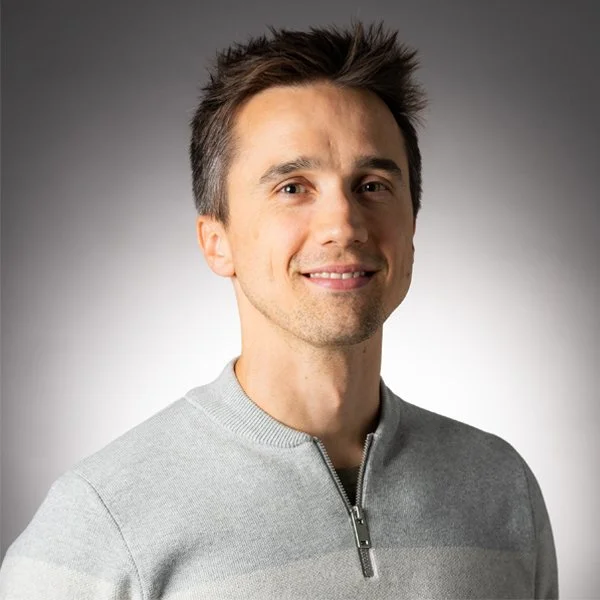
Karl Giles, Principal for Hydrogen, IAAPS / University of Bath
In his role, Karl oversees the technical delivery of IAAPS’ hydrogen-themed customer projects. He is also responsible for the hydrogen infrastructure at IAAPS, ensuring that the technical capabilities of their facilities align with customer requirements. Karl has been at IAAPS for four years, and in that time has led projects spanning a wide range of hydrogen propulsion technologies and applications. Before joining IAAPS, Karl was a post-doctoral researcher at the University of Bath, where he supported research programmes on advanced automotive propulsion technologies. His PhD was on the subject of autoignition modelling in highly boosted gasoline internal combustion engines.
Who should attend?
This session is ideal for:
SMEs and scale-ups developing hydrogen vehicle or component technologies
Academics and researchers seeking industrial collaboration
Innovation leads and business development professionals in the automotive and hydrogen sectors
Follow-on Opportunities
Participants will be invited to submit an Expression of Interest (EOI) to access up to five days of bid development support, including proposal review and a joint GW-SHIFT and SETsquared letter of support to strengthen applications.
If you’re developing or adopting hydrogen technologies, this session will provide practical knowledge to support your work and help you stay ahead of regulatory and industry best practices.