Hydrogen Industry Forum highlights the collaborations driving hydrogen innovation
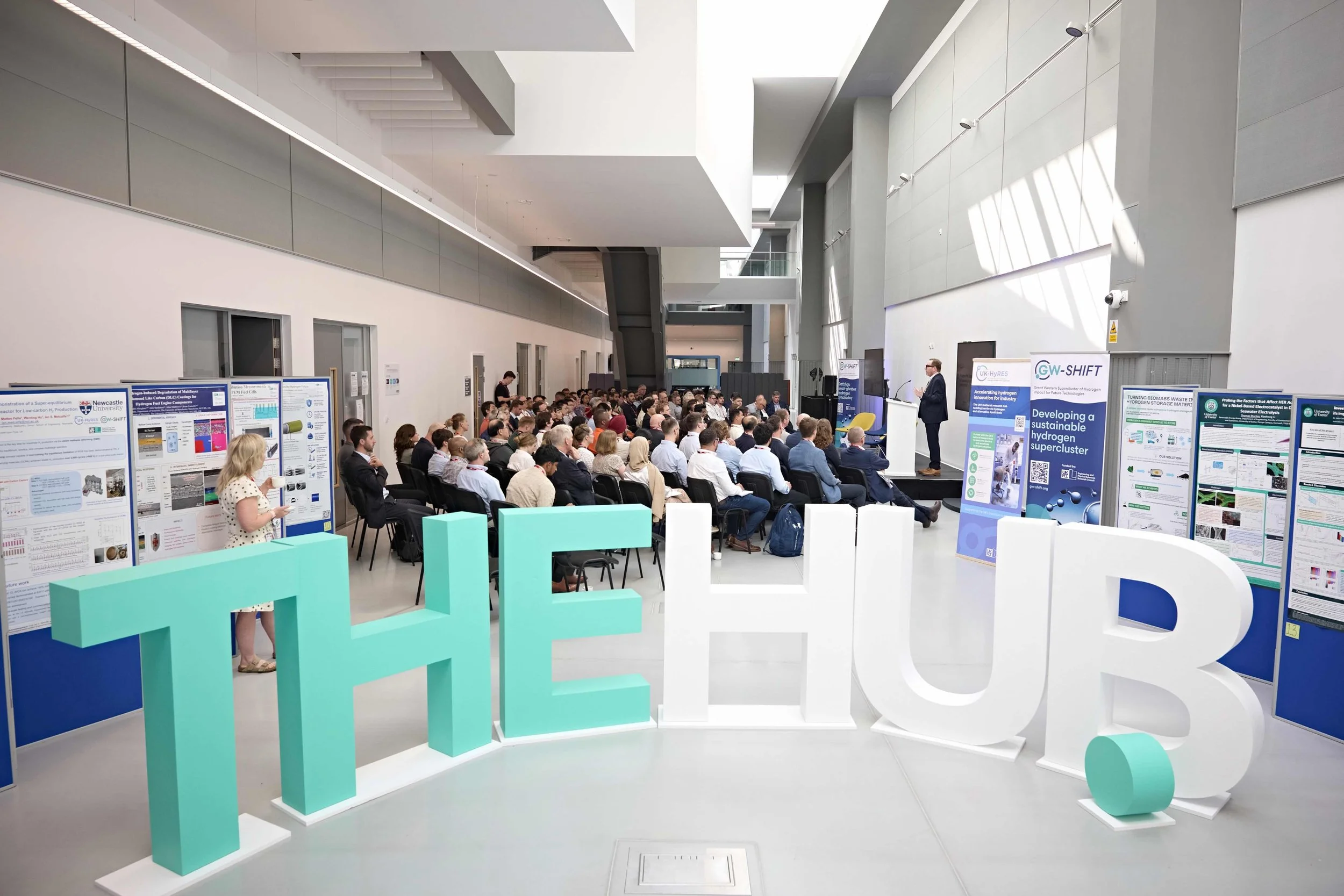
Researchers, industry leaders, policymakers and innovators gathered at the Futures Innovation Hub, in July, for the Hydrogen Industry Forum, bringing together expertise from across the hydrogen ecosystem to explore the opportunities and challenges shaping the sector. Hosted by GW-SHIFT and UK-HyRES, the event focused on a common ambition – ensuring hydrogen technologies move beyond successful research projects and into real-world deployment.
The Hydrogen Industry Forum marked the launch of Bath University's first Futures Innovation Hub at Bristol & Bath Science Park. Designed as a collaborative space for businesses, researchers and innovators working across energy systems, hydrogen, clean propulsion and low-carbon technologies, the Hub aims to strengthen connections between research and industry and accelerate the journey from innovation to deployment.
Opening the forum, Professor Phil Taylor, Vice-Chancellor and President of the University of Bath, underlined the importance of bringing together the people, ideas and expertise needed to accelerate progress.
"Events like the Hydrogen Industry Forum are incredibly important because they bring together the people, ideas and expertise needed to accelerate progress. The transition to a low-carbon future will require sustained effort across technological, social, commercial and economic challenges, and collaboration across sectors will be central to making hydrogen a reality."
That commitment to collaboration was reflected not only in the conversations throughout the day, but in the venue itself. The Futures Innovation Hub is creating a bridge between research and industrial application, making it a fitting setting for conversations centred on innovation and deployment. Chris Brace, Professor of Automotive Propulsion and Executive Director of IAAPS, believes that creating these opportunities for collaboration is essential.
“The strength of places like Futures Innovation Hub is that they bring industry and academia into the same space. When researchers, engineers and businesses share ideas and understand each other's challenges, you get real cross‑pollination and the chance to turn cutting‑edge hydrogen research into solutions that industry can actually use."
Those connections were evident throughout the event. Across transport, industry and energy, contributors demonstrated how hydrogen technologies are progressing towards commercial application, from maritime vessels and hydrogen-powered aircraft to regional production facilities, electrolyser technologies and future distribution networks. While each sector faces different technical challenges, the discussions consistently returned to the importance of developing the wider ecosystem needed to support deployment.
Alongside advances in technology, speakers also explored the conditions needed to unlock long-term growth. Investment certainty, policy clarity and supporting infrastructure emerged as recurring themes, alongside the need to strengthen regional clusters and create joined-up supply chains capable of connecting hydrogen production with end users. Discussions also highlighted the importance of public engagement and ensuring hydrogen projects are developed as part of wider energy systems rather than in isolation.
Professor Xiaohong Li, Co-Director of GW-SHIFT, highlighted the role that collaborative research plays in achieving this, explaining: "Working closely with industry is essential to understanding the challenges facing the hydrogen sector, both in terms of deployment and policy. Initiatives like GW-SHIFT and UK-HyRES create the connections needed to align research with real-world needs and accelerate the development of hydrogen solutions."
This reinforced that collaboration remains one of the sector's greatest strengths. Researchers gained a clearer understanding of industry priorities, businesses shared practical experience from deployment projects, and policymakers heard directly about the barriers still facing the sector.
Enthusiasm for hydrogen’s potential was clear, but the discussions also reflected a pragmatic understanding of its role. Across conversations with industry leaders, researchers and early career researchers, there was agreement that hydrogen is one piece of a much larger transition. This was echoed by Dr Laura Finney, Associate at Arup, chair of the Hydrogen Energy Session, “We’ve never powered the UK with just one fuel, and our net-zero future should be the same. A smart mix of electrification and hydrogen, working together, will give us a cleaner, more resilient energy system.”
Samir Soares, R&D Engineer at PNDC and Research Assistant at the University of Nottingham, works at this very intersection, “Hydrogen isn’t a silver bullet for every decarbonisation challenge, but it’s vital wherever electrification or synthetic fuels aren’t the best option – especially in heavy industry and transport – as part of a balanced future energy system.”
As the discussions progressed, attention turned from today's challenges to tomorrow's opportunities. Creating a thriving hydrogen economy will require the sector to speak with a more unified voice while continuing to strengthen collaboration across the supply chain.
Bob Sorrell, CEO of the Royce Hydrogen Accelerator, believes forums like this have an important role to play, “The big opportunity for hydrogen is to agree a coherent set of messages about how we scale production, bring costs down, and make fair, whole‑life cost comparisons with other options.”
As hydrogen’s role in UK’s clean energy system is begins to take shape, the role early career researchers are set to play also cannot be understated either. Bob added, “Early career researchers have a huge role to play if they talk to potential customers early, understand what really needs to be tested, and shape their work so it’s ready to move up the queue to proof of concept and prototype development. Programmes like the Royce Hydrogen Accelerator, GW-SHIFT, and UK-HyRES are giving them structured routes into real‑world industrial deployment.”
The Hydrogen Industry Forum demonstrated the momentum building across the UK hydrogen community and the value of creating opportunities for knowledge exchange. By bringing together expertise from across the ecosystem, GW-SHIFT and UK-HyRES continue to strengthen the partnerships that will help translate research into deployment and support the development of a resilient, collaborative hydrogen ecosystem.