
Hydrogen Week: The role of hydrogen in industrial decarbonisation
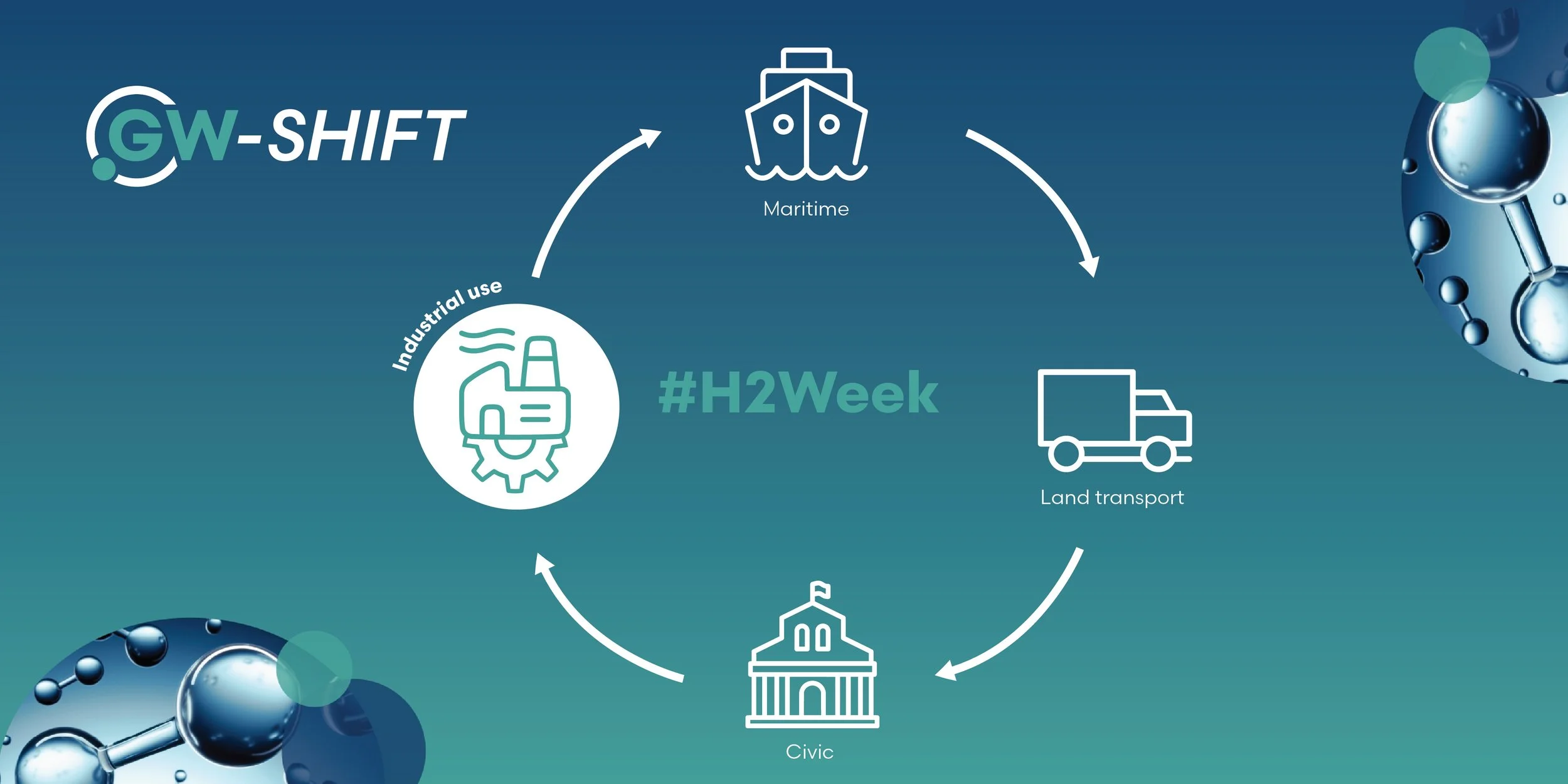
Across Hydrogen Week, we’ll be looking at role of hydrogen in decarbonising different sectors. Today we turn our attention to hard-to-abate industries, that electrification can’t reach. From green hydrogen supply routes being built into industrial clusters across South Wales, to fuel switching projects already underway in energy-intensive sectors – there’s a lot to explore.
Industry is under pressure like never before. Rising energy uncertainty, global competition, and tightening climate targets are reshaping the landscape for heavy industry across the UK. For sectors such as steel, cement, chemicals, fertiliser production and manufacturing, the challenge is clear: decarbonise - or risk being left behind.
These are the “hard-to-abate” sectors. Essential to economic security, but deeply reliant on high-temperature, fossil-fuel-intensive processes.
Hydrogen is emerging as one of the few credible pathways to change that.
Not as a future promise - but as a practical, already-deploying solution that can reduce emissions while maintaining the reliability, performance, and competitiveness that industry depends on.
From ambition to industrial reality
Across South Wales and South West England, hydrogen is no longer an abstract concept; it is being built into real industrial systems.
In Wales, projects such as Pembroke Green Hydrogen are developing direct supply routes into industrial clusters, enabling businesses to begin replacing fossil fuels with low-carbon hydrogen while strengthening regional energy resilience and supply chains.
In the South West, Langage Green Hydrogen is demonstrating how hydrogen can be integrated into existing industrial operations, supporting fuel switching in energy-intensive sectors such as clay production, without disrupting productivity or output.
At a wider system level, proposals like HyLine Cymru highlight the scale of ambition emerging across the region, connecting offshore renewable energy generation with industrial hydrogen demand. This kind of infrastructure is critical to unlocking deep decarbonisation at scale, while maintaining the strength of existing industrial bases.
Together, these developments show a clear shift: hydrogen is moving from policy to practice, and from demonstration to deployment.
As Ben Burggraaf, CEO at Net Industry Wales, highlights, hydrogen is becoming integral to system design and resilience:
“Hydrogen also starts to play a role, particularly in utilising that source of energy in a much more efficient way. This dual vector approach, not only producing electricity but also hydrogen from offshore wind, will become a really important part of our overall resilience story.”
Not just decarbonisation - competitiveness
For industry, the value of hydrogen goes beyond emissions reduction. It is increasingly a question of competitiveness, resilience, and long-term viability.
Hydrogen offers a route to reduce exposure to volatile fossil fuel markets, while maintaining the consistent, high-grade energy supply that heavy industry requires. It also enables greater flexibility in how energy is produced, stored, and used - helping industries adapt to a renewables-led energy system.
As Matt Hindle, Head of Net Zero and Sustainability at Wales & West Utilities, explains in Episode 3 of the GW-SHIFT ‘The Only Way is Hydrogen’ podcast:
“We need to be able to supply the sort of industries that use natural gas today. And we also need to be able to develop an energy system which is clean but also reliable across the way that we use energy in the system.”
That combination is critical. Hydrogen is not simply replacing a fuel source; it is reshaping the operating environment for industry, supporting both decarbonisation and the long-term competitiveness of hard-to-abate sectors.
A rapidly growing opportunity
The scale of the opportunity is significant. The global hydrogen market is forecast to exceed £750 billion by 2050, with the UK expected to capture between £30–90 billion of value.
For regions like South Wales and South West England, the conditions are already in place: strong industrial heritage, established engineering capability, and growing access to renewable energy resources.
But this is not just a market story - it is also a transformation in skills, jobs, and industrial capability. Hydrogen is already creating demand across engineering, construction, safety, digital systems, manufacturing, and operations, supporting a new generation of industrial roles.
Turning opportunity into action with GW-SHIFT
Realising this potential requires more than individual projects. It depends on collaboration across industry, academia, and the public sector, and the ability to move ideas into deployment.
GW-SHIFT is designed to accelerate that process.
Through a combination of funding, training, and research collaboration, it supports organisations at every stage of their hydrogen journey:
Hydrogen Ecosystem Builder – fully funded training to help organisations develop projects, build partnerships, and access expert support
Collaborative R&D – work with leading academics to validate technologies, test ideas, and reduce innovation risk
HyIMPACT & SPRINT funding – support for high-potential innovation projects with clear routes to commercialisation
SECONDMENTS – enabling cross-sector collaboration between industry, academia, and public sector partners
Whether exploring hydrogen for the first time or scaling existing activity, GW-SHIFT provides the platform to move from concept to delivery.
Because the hydrogen transition is not something any one organisation can deliver alone - it is built through shared capability, shared ambition, and shared progress.
Professor Mi Tian, Co-Director of GW-SHIFT says: "Hydrogen is becoming a practical route for industrial decarbonisation, particularly for sectors where direct electrification is difficult. For South Wales and South West England, the opportunity is not only to reduce emissions, but also to build a more resilient and competitive industrial system. Through GW-SHIFT, we want to connect research, industry and regional partners so that promising hydrogen technologies can move faster from concept to real deployment.”
Hydrogen is no longer on the horizon of industrial decarbonisation. In regions like South Wales and South West England, it is becoming part of the operating reality and reshaping how industry powers itself, competes, and grows.
Missed a post this week? Catch up on the full Hydrogen Week series
Across five days, we’ve explored hydrogen’s role in maritime, transport, civic energy systems, and industrial decarbonisation - showing how it is already being deployed across real-world sectors to support a more resilient, low-carbon future.